Restructuring Regional Aviation
Providing expertise and support in :
Network reconnection & Development
Focus
Business Planning
Investment
Regional Aviation Is Our Expertise
Regional Air Services
- Essential Air Services
- Network Assessment
- Tertiary Markets and Emerging Opportunities
- Focus on Time & Efficiency and avoiding crowded airport systems as hub bypasses or new feeder service embarkation points
Capacity Assesment
- Aircraft Evaluation
- Full Technical / Operational / Fiscal appraisal
- Understanding Growth Factors
- Quality of Service indicators
- Competitive Performance indicators
- Trend Analysis
Revenue Scheduled / Charter
- Capacity Purchase Models
- ACMI Charter
- Sole Use & Corporate Sked/Charter mix
- Seasonal Leisure Charter
Hub Development
- Co-op with Legacy Hub Carriers
- Super Code-Shares
- Commercial and Operational
- Benefits / Challenges
Over the years we have been instrumental in opening up a wide variety of key regional routes from secondary cities throughout the UK and mainland Europe predominantly feeding into capitals and hubs. Today the market has changed and new technology aircraft are on the horizon and a pathway is required
Increasingly, over the last 10 years, the regional scheduled airline industry has been in decline - with numerous regional airlines having ceased trading, in many cases, leaving key cities underserved as the major network carriers focus on protecting hub networks, in the face of LCC competition, serving capital cities and intercontinental routes and through fleet capacity upsizing.
With the remaining few regional operators increasingly risk averse there is a need to re-engineer the business model review the need to "right size" capacity in today's new market. Consider again the value chain and the role of the regional, whereby cities and regionals need to partner with each other to maintain/re-establish these key services to ensure vital connectivity.
The purpose of "Regional-Connect" is also to identify these new network opportunities including general and business aviation leading to the deployment of emerging EV technologies and regional operations.
Principal Advisers

Ian Woodley
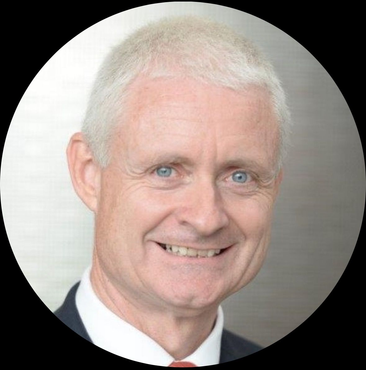
Cathal O'Connell
Cathal has completed 45 years in the Aviation industry with the last 23 in senior roles in the regional sector at CCO and CEO level, covering strategic and economic development , wet lease ACMI operations , route planning, scheduled and non – scheduled services.
During this time Cathal has built and maintains numerous C level relationships amongst all the peer group key movers in the regional industry as well as legacy carriers.
Most recently Cathal has just completed the role of CCO with CityJet extending over a 10 year period leading the business to become the biggest ACMI supplier in the EU.
At heart he is still actively attached to small aircraft Ops being both a PPL holder and Private aircraft owner.
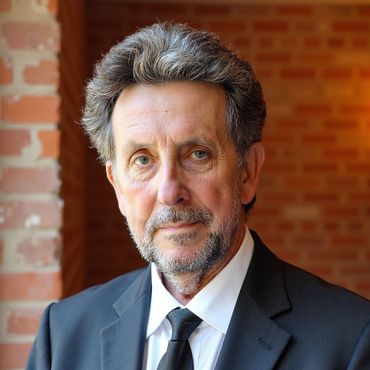
David West
David West is a seasoned aviation professional with a distinguished 44-year career and over 25,000 flight hours. His expertise spans commercial operations, regulatory development, technical management, and frontline flight operations. Throughout his career, he has held senior leadership roles in airline management, international contract negotiation, and pilot training and oversight.
David began his aviation journey in commercial and sales management with third-level airlines including Centreline, Dan-Air, Euroair, and Business Air. He later became Commercial Manager at British Caledonian Helicopters, where he was instrumental in securing Chinese government oil support contracts while stationed in Southern China.
As a pilot, David has flown a wide range of aircraft including the DC9, SD360, HS748, F27, and EMB110 with UK carriers such as Euroair and British Midland. He then spent 26 years with Cathay Pacific Airways, serving as Captain, Training Captain, and Examiner on the B747-200/300/400, L1011 Tristar, Airbus A330, and A340. During this time, he also served as a Technical Manager for the Airbus fleet acting as a liaison with Airbus in Toulouse and leading initiatives in technical documentation, pilot training systems, and aircraft equipment evaluation.
In 2003, David founded Loch Lomond Seaplanes, launching Europe’s first scheduled seaplane service since the 1950s with the introduction to the UK of the amphibious Cessna 208. Over two decades, the company transported around 10,000 passengers annually to the islands of Scotland’s west coast.
Beyond operations, David has advised governments and commercial entities worldwide on seaplane start-ups as well as the development of national regulatory frameworks.
With over 6,000 hours on the Cessna 208 Caravan alone, David is a UK CAA-licensed instructor and examiner on both seaplanes and the C208, continuing to contribute to the industry through training and consultancy.